Wasp, Hornet, or Yellow Jacket? We Treat All Three
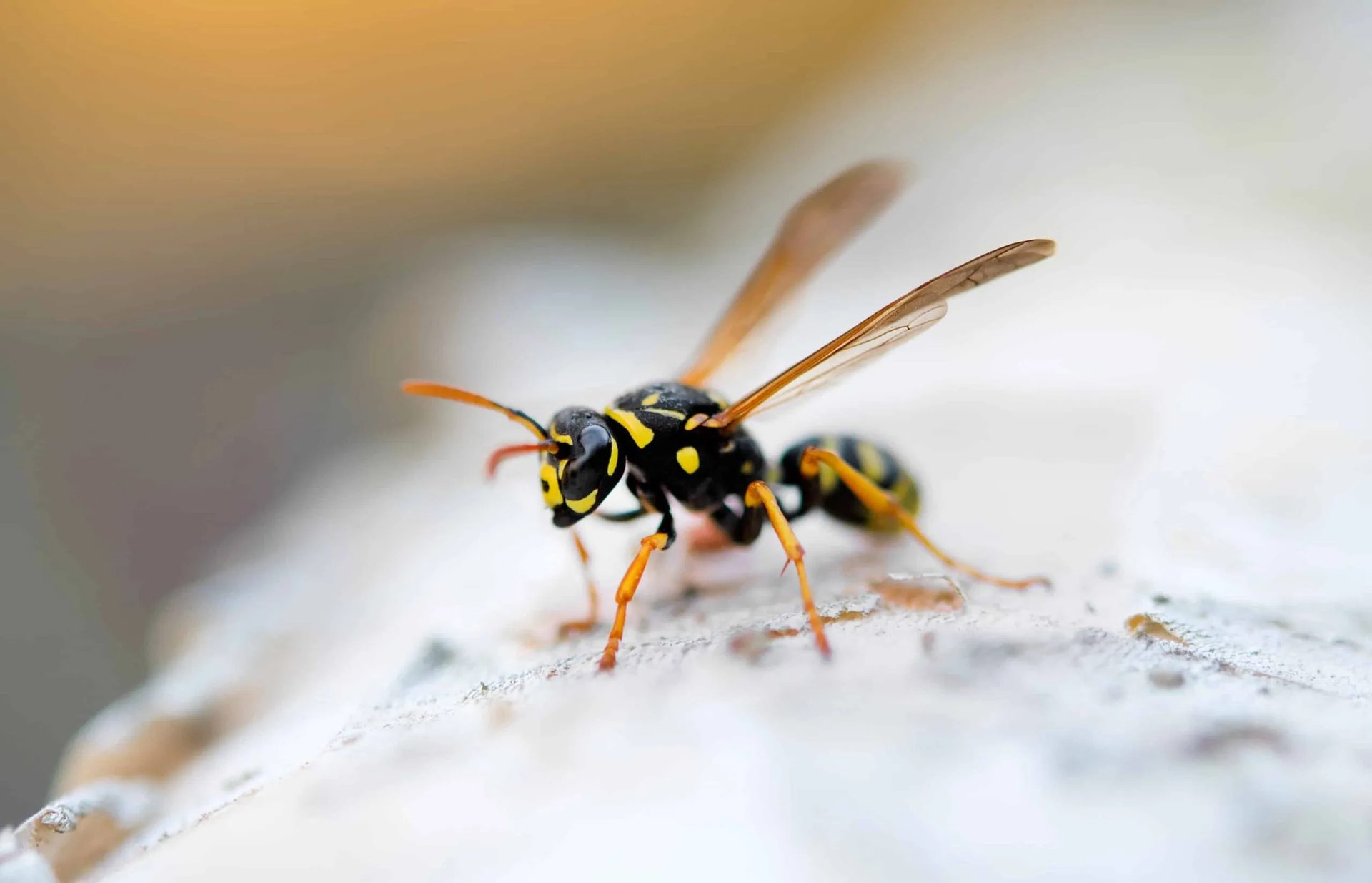
Most people who call us do not know which one they have, and that is fine. Paper wasps, bald-faced hornets, yellow jackets, and the occasional honey bee all get lumped together as bees or wasps by anyone who is not looking closely. You saw something that stings, it is nesting on your property, and you want it gone. Telling them apart is our job, not yours, though if you are curious we broke down how to tell yellow jackets, wasps, hornets, and bees apart.
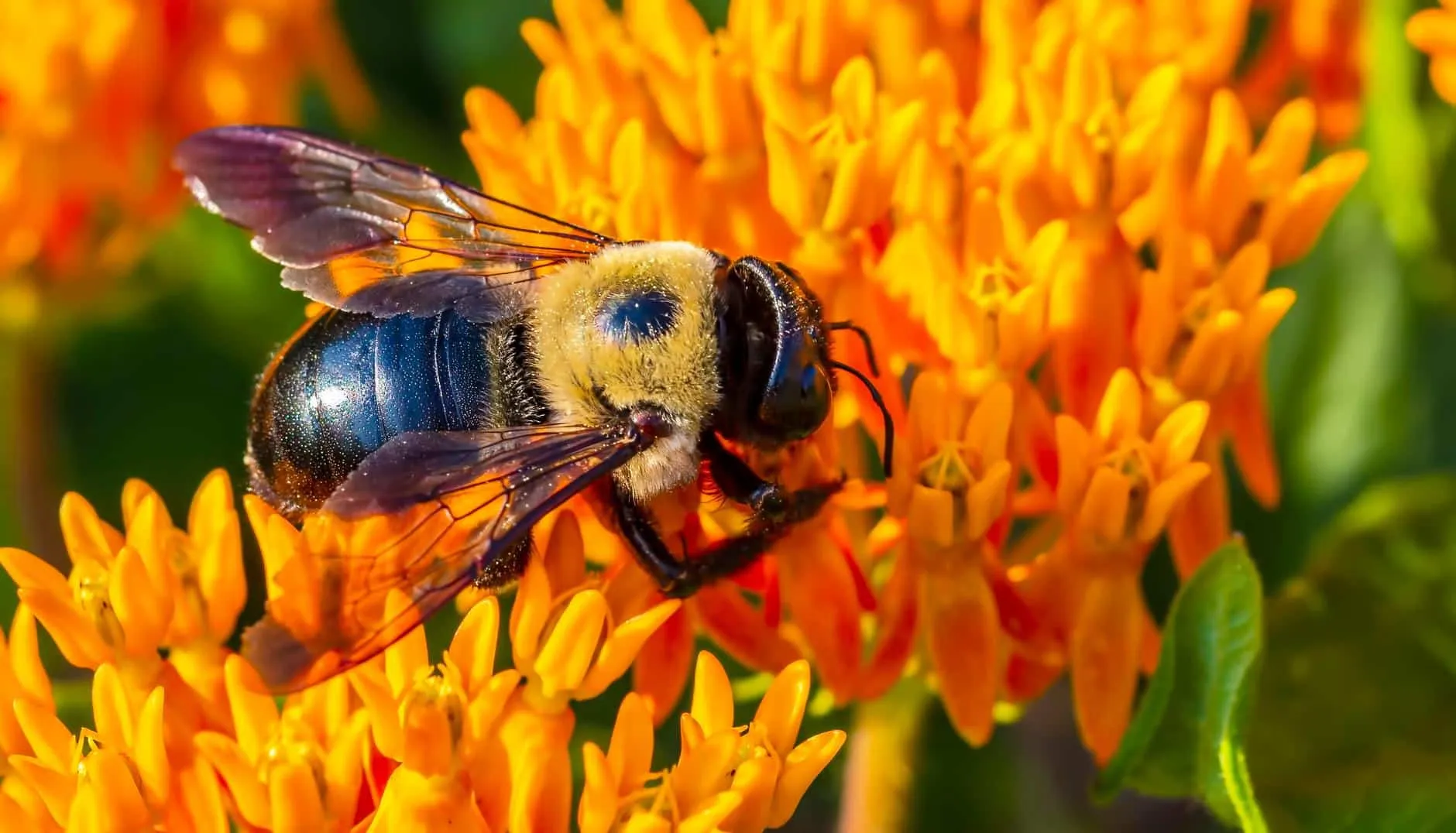
It does matter for treatment, though. Yellow jackets nest underground, in wall voids, and behind siding, where one small entry hole can hide thousands of workers. Paper wasps build the open, umbrella-shaped combs you see under eaves and deck rails. Bald-faced hornets build the big grey papery footballs in trees and on soffits, and defend them from a long way off. Each one needs a different approach, and getting it wrong turns a manageable nest into an angry one. Carpenter bees are a different problem entirely, since they drill into wood rather than swarm, and we cover those under carpenter bee control.
Timing matters more than anything. Colonies build all summer and peak from August into October, which is exactly when homeowners around Centerburg start getting stung near patios, trash cans, and hidden ground nests. A nest that looked minor in June can hold thousands of stinging workers by Labor Day. We run out of Centerburg and cover Knox County and the surrounding towns, listed on our service areas page.
Caudill starts by finding and identifying every nest, since the hidden ones in walls, soffits, and underground do the most damage to your late summer. We treat the nest directly, clear out the leftover foragers so they stop returning, then seal the gaps and entry points that invited them in. A follow-up confirms the colony is done.
Signs You Need This Service
- A steady stream of insects flying in and out of one hole in the ground, in your siding, or under a soffit. Yellow jackets use very small openings, but the colony inside can be enormous.
- An open, umbrella-shaped comb tucked under an eave, deck rail, porch ceiling, or grill lid. That is a paper wasp nest, and it will keep growing all season.
- A large grey papery nest, roughly football-shaped, hanging in a tree, on a soffit, or off the corner of the house. That is usually bald-faced hornets, and they defend it aggressively from several feet away.
- Sudden aggressive behavior when you mow, trim bushes, or walk near one specific spot in the yard. That is the classic sign of a ground nest you have not spotted yet.
- Repeated sightings in the same area, like a porch corner, a landscaping edge, or one section of siding, usually means a nest they are defending nearby.
- Insects swarming trash cans, food, or sweet drinks in late summer. Yellow jackets get persistent about food in August and September, and constant activity with nothing out usually means a colony close by.
Our Process
Identification & Nest Location
We start by identifying what you actually have, since wasps, hornets, and yellow jackets all get treated differently. Then we inspect the property to find every nest and confirm activity levels. Many nests are hidden in the ground, in wall voids, in soffits, or in landscaping, so pinpointing the exact entry point is the part that makes the treatment work.
Safe, Targeted Treatment
Our technicians use professional-grade equipment, protective gear, and proven application methods to eliminate the colony at the nest. Treatments are timed for when the insects are least active, which improves results and reduces the risk to everyone on site. We solve it at the source rather than knocking down the ones you can see.
Nest Elimination & Activity Monitoring
After treatment we verify that activity drops off and confirm the area is returning to normal. Pressure should fall quickly, though heavy infestations sometimes need additional monitoring. We tell you exactly what to expect in the hours and days after service.
Prevention Recommendations
Once the nest is handled, we seal the gaps and entry points that made your home attractive in the first place, and walk you through the yard and structure changes that keep new colonies from setting up next season.